The worked examples
Seven loops, each shown actually running with the receipts: iteration logs, cost
ledgers, before/after, charts, and (for two of them) real .xlsx output. Everything
is synthetic and carries a "reconstruction for teaching" label; the dollar figures are illustrative — as of June 2026, verify before relying.
| # | Example | Domain | Primitive | What it proves |
|---|---|---|---|---|
| 1 | The $217 Overnight Code Review | coding | /loop |
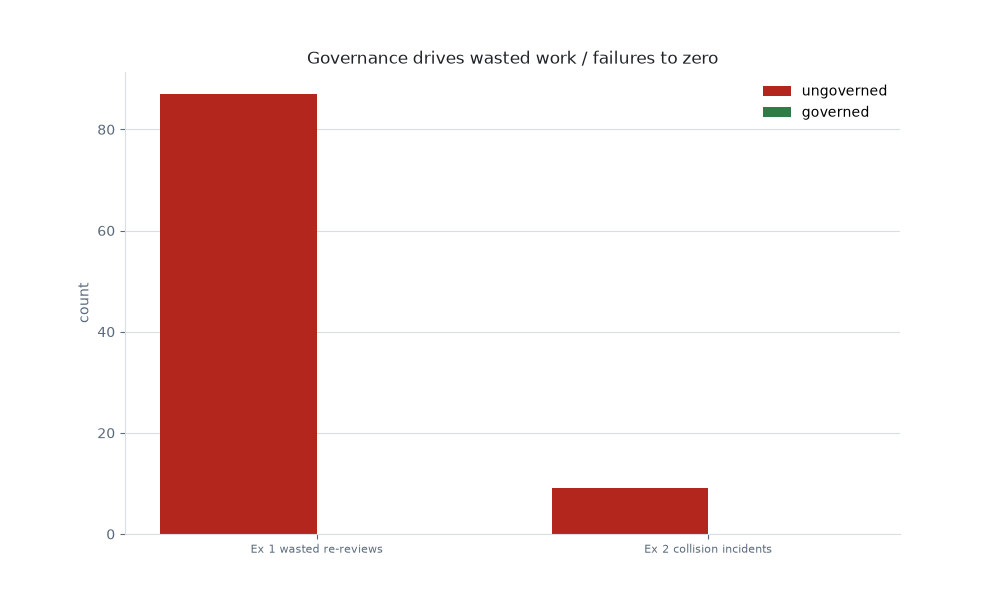
circuit-breaker + cost cap (ungoverned vs governed) |
| 2 | Two Loops, One Repo | coding | /loop ×2 |
multi-loop coordination (lease + merge-queue) |
| 3 | Claim-Ledger Security Fix | coding | /goal |
maker-checker on executable evidence |
| 4 | Reproduce-Before-You-Fix | coding | /goal |
reproduction-gate (prove the bug first) |
| 5 | Ad-Spend Reconciliation | non-coding | /goal |
validation-gate over messy data (.xlsx) |
| 6 | RFP / Security Questionnaire Pack | non-coding | /goal |
citation claim-ledger / cite-or-cut (.xlsx) |
| 7 | Deliverability Rescue (climb to 95) | non-coding | /goal |
metric-climb with an independent grader |
Four coding, three non-coding; every example owns a distinct loop pattern.
The numbers, side by side
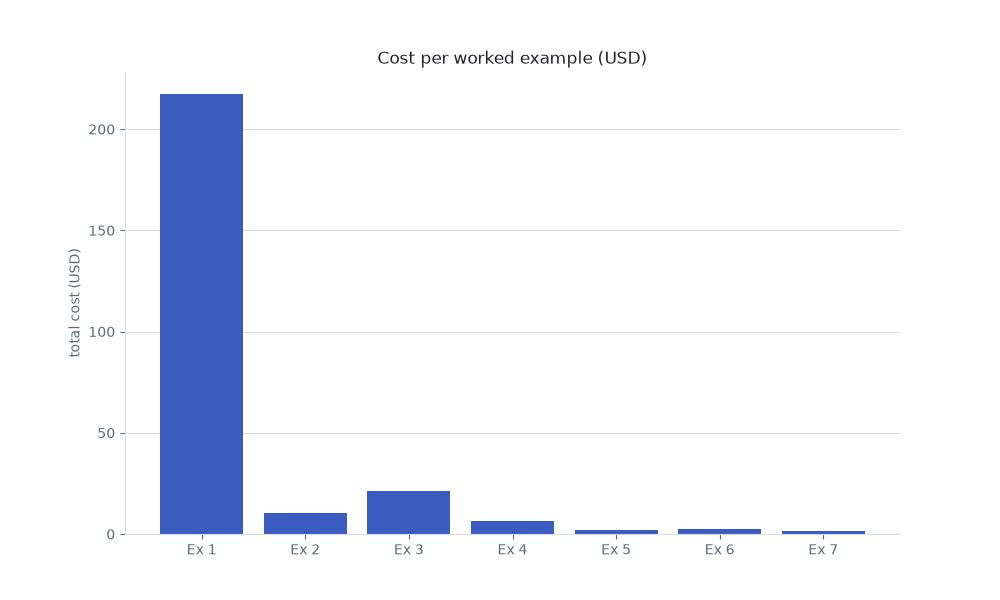
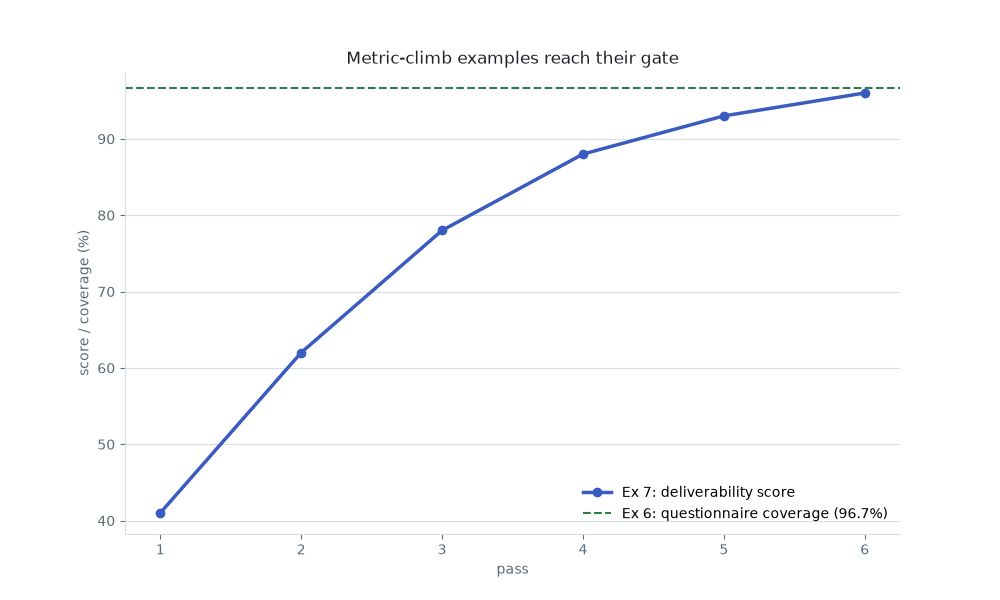
Cost per example, and the metric-climbers reaching their gate:
How to read an example
Each example folder follows the same shape:
- README.md — the narrative: Use-when, the copy-paste loop contract (the same one in the prompt library), Verify, Steps, "What happened", and the chart.
- headline.json — the example's quoted numbers. Every figure in the README prose is checked against this file, so the receipts and the story can't drift.
- the artifacts —
loop-log.*,cost.csv, ledgers, inputs/output, and the.xlsxwhere applicable.artifacts.mdlists them all.
Start with the overnight review — it's the clearest "ungoverned vs governed" contrast.